Cognitive Overload Is Why Students Disengage Before the Lesson Even Starts
Students disengage before the lesson even starts — not because the work is too hard, but because cognitive overload has already shut down their working memory. Here are the practical moves that clear the path.
The other week, I led a short professional learning session on reaching our multilingual learners. When I was preparing, it pushed me to reflect more deeply on my own classroom, especially on the moments when students seem to disengage before learning has even had a chance to start.
Cognitive load, the total demand placed on working memory at any given moment, is often the culprit: too many instructions at once, unfamiliar vocabulary layered on top of new content, or a page that seems to ask ten things before students have processed the first. When cognitive load spikes, students disengage, stop reading, and wait for someone to tell them what to do. And often, it happens before the lesson even begins.
So, how do we know all our learners truly understand?
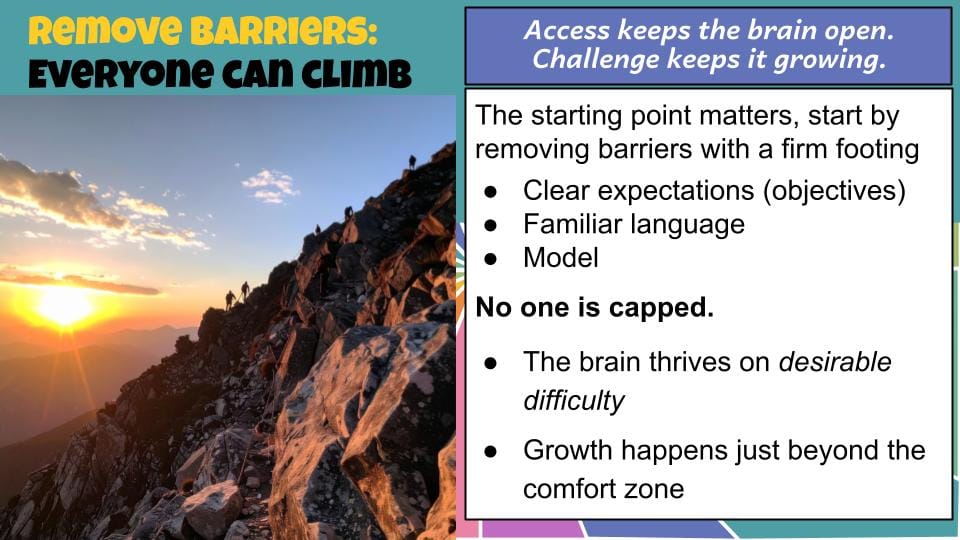
When we design better lessons for multilingual learners, we design better lessons for everyone. Removing barriers doesn’t lower rigor, it widens the path so every student can climb as far as they’re ready to go.
What Cognitive Overload Does to the Learning Brain
When students struggle, it’s often a signal that something in the task is blocking access: unclear language, hidden expectations, unfamiliar vocabulary without context, or simply too much to process at once. This idea sits at the heart of John Sweller's cognitive load theory It is the idea that working memory can only hold so much at once, and when we overload it, learning stalls.
Designing for access means intentionally planning instruction so students can:
- Understand the task
- Connect to what they already know
- Use language supports to express thinking
- Demonstrate learning in multiple ways
It’s not about lowering rigor.
It’s about removing unnecessary barriers so students can engage in rigorous thinking.
This mindset aligns with CAST's Universal Design for Learning core belief: everyone deserves the opportunity to grow and thrive. Here it means removing barriers for everyone to be able to climb.
- Access keeps the brain open.
- Challenge keeps it growing.
Learning isn’t a fixed-height structure where some students can reach the top and others can’t. It’s a climb, and the starting point matters.
Why This Matters: What Learning Science Tells Us
Research in neuroscience and learning science reinforces what we see in classrooms:
- The brain learns through successful effort, not repeated failure (e.g., work on motivation and mindset by Carol Dweck, 2006).
- Stress and perceived threat (“I’m lost,” “I’m behind”) reduce working memory and language access (affective neuroscience research including Mary Helen Immordino-Yang & Damasio, 2007).
- Early success experiences trigger dopamine release, increasing motivation and persistence (syntheses in educational neuroscience; see Sousa, 2017).
- Multilingual learners are disproportionately affected by unclear language demands (second-language acquisition research such as Stephen Krashen, 1982).
- When we design for access, we improve outcomes for all learners, not just some (Universal Design for Learning research; Meyer et al., 2014).
For all learners, access isn’t a support. It’s a prerequisite.
Understanding isn’t about exposure; it’s about opportunities to retrieve, apply, and express learning.
How To: 4 Practical Moves You Can Use Tomorrow
1️⃣ Reduce Cognitive Load Before the Task Begins
One of the biggest barriers to learning isn't the content, it's confusion about what students are even supposed to do. The starting point matters, start by removing barriers with a firm footing. Growth happens just beyond the comfort zone, not miles outside of it.
Before any task begins, I want my students to be able to answer three questions without hesitation:
- What am I being asked to do?
- What does success look like?
- How does this connect to something I already know?
Here’s how I make that happen:
- Post a clear objective or “Can Do” statement in student-friendly language. I explicitly post the weekly objectives (usually 3 or 4) and have students choose one to focus on (they’ll still learn all of them, but this helps them own their goal).
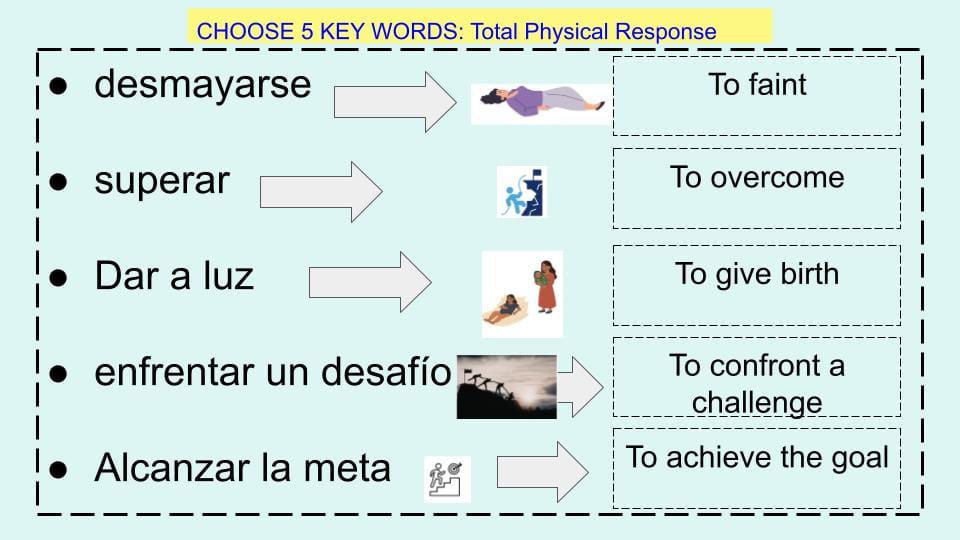
- Preview 3–5 key vocabulary words — the ones you’ll use most during the lesson or week, before the reading or task, not during. I use Total Physical Response where I have students co-create an action or drawing to remember each word. Then I say the word and students act it out, then they practice for low-stakes quizzing each other.
- Spend 2 minutes activating prior knowledge with a quick turn-and-talk, a visual, a connection question
These steps give students a firm footing so they can put their energy into thinking, not decoding directions.
Here’s an example from the other week: I posted five vocabulary words and co-created actions with the class. The next day, I showed just the picture to see if they remembered, then said the word without showing it and students performed the action. Throughout the week, they kept seeing and hearing the words in context and in the readings. These words even become a fun, content-based brain break: students stand back-to-back, I start telling a story using one of the key words, and when the word comes up, they jump to face each other and perform the action.
2️⃣ Retrieval as a Barrier Remover
This one changed my teaching more than almost anything else.
Most of us have heard about the Forgetting Curve (Ebbinghaus, 1885), or the idea that we lose a huge chunk of new learning within hours if we don't revisit it.
Without retrieval:
- 50 percent of new information disappears within an hour,
- 75 percent is gone by the next day, and
- Up to 90 percent fades away within a week…(Murre & Dros, 2015).
But do we design our lessons with that reality in mind?
With retrieval, students build confidence, strengthen memory, and develop the ability to connect new ideas to what they already know. For multilingual learners especially, retrieval practice builds the language pathways they need to access content in the future and is one of the fastest ways to remove barriers. For high flying students, retrieval empowers learners to strengthen learning pathways, builds confidence and leadership skills in helping others!
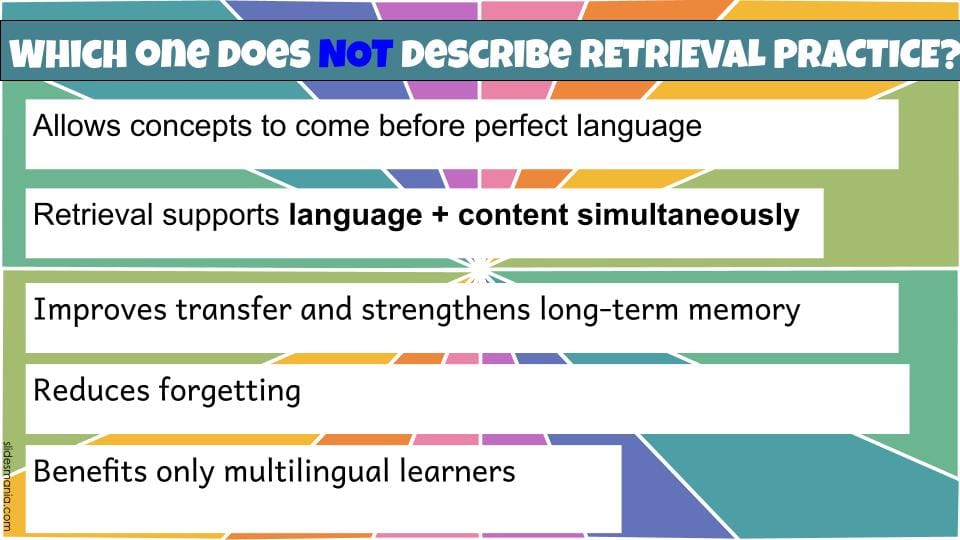
Practice retrieving yourself! Which statement does not describe retrieval?
The good news? Retrieval in your classroom doesn't have to be complicated or time-consuming. Try:
Brain Dump: Pause your lesson and have students write or draw everything they remember. That's it. Scientists call this "Free Recall" and research shows it boosts retention of past and future content, improves organization of knowledge, and builds confidence. Then just move on.
Level up: Have students identify main ideas from the lesson:
- Swap with a partner and add something else you know!
- Is there anything in common that both of us know?
- Was there something you missed?
- Why do you think you remembered what you did?
The TWO things: Beginning of class activator, middle of class check-in or exit ticket i.e. write down 2 takeaways from today’s lesson or last class. Or 2 words they learned last week. Or 2 things they'd like to know more about. Vary the format — post-its, turn-and-talk, partner share, quick sketch. The format doesn't matter. The retrieval does.
Level Up: Have students swap with a partner. What did they both remember? What did one know that the other missed? Why do they think they remembered what they did? Now you've added metacognition to your retrieval practice, and it took maybe four extra minutes.
- Connect 2 things from today’s lesson to prior learning
- What are 2 ways today’s topic relates to your life?
- Share with a partner: what is in common or new?
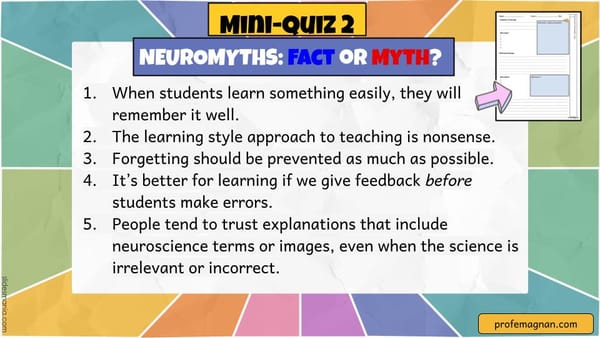
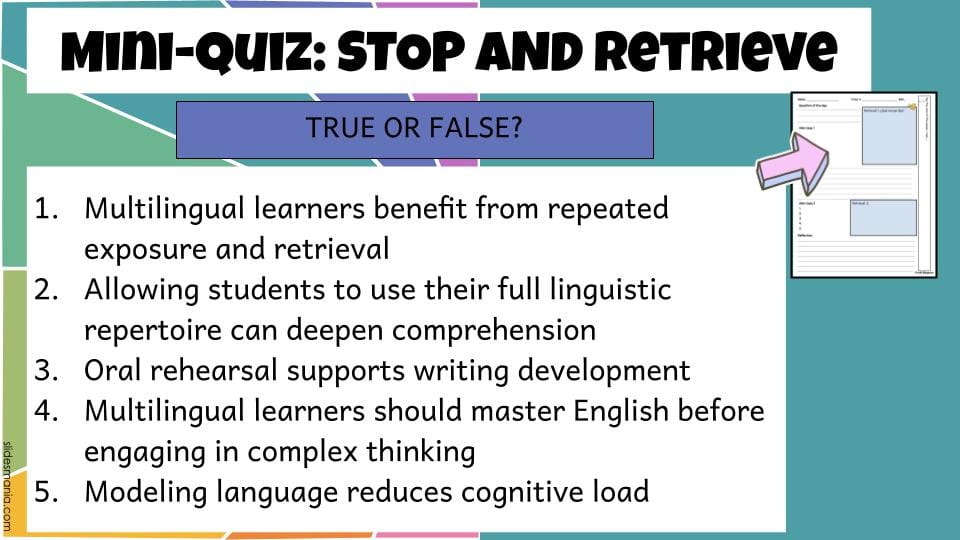
Mini-Quiz: Practice retrieval with this mini-quiz. Remember to strive for a desirable difficulty.
3️⃣ Anticipate Barriers With a UDL “Stoplight”
One of the most powerful things we can do for learners is help them develop awareness of their own understanding. Not just "do you get it?" but actually building the habit of self-monitoring.
This takes a few minutes but gives me immediate insight into who needs support.
🔴 Red: I'm unsure / I need support
🟡 Yellow: I'm getting there
🟢 Green: I feel confident
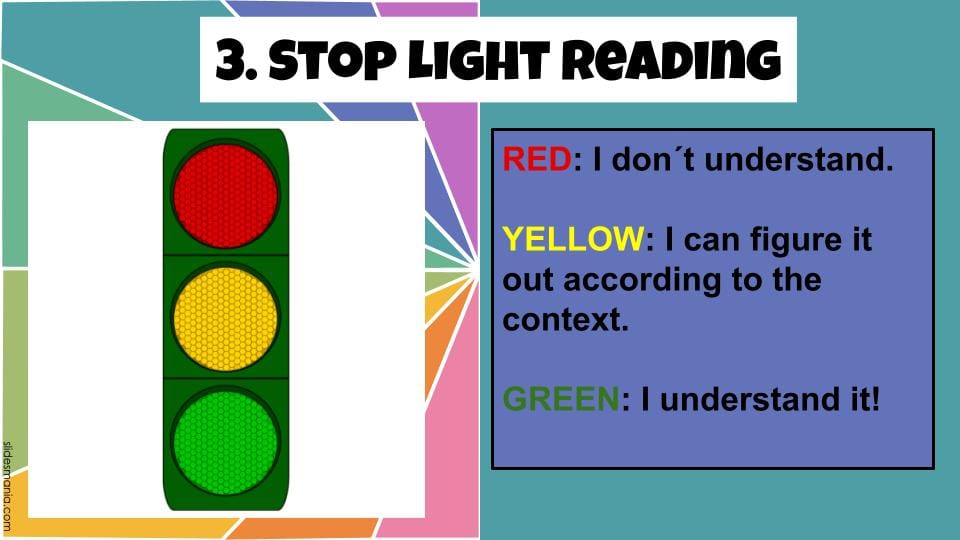
Then, right after, flip the paper over and retrieve. Write what you remember. Identify the main idea. Add ideas with a partner. Connect it to something from before.
This keeps challenge high and keeps support in place. Students who are at red get a moment to process (also feel free to let students choose their comprehension colors!). Students who are at green get pushed to go deeper. And everyone is doing the same core move: retrieving and reflecting.
Access + challenge = learners on solid footing who can climb to new heights.
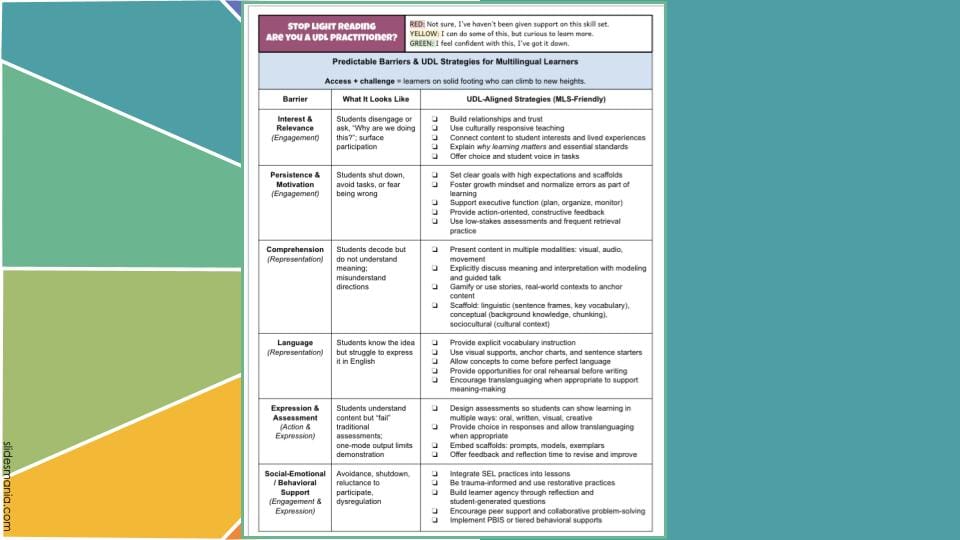
Give the Stop Light Reading strategy a chance yourself with "Are you a Universal Design for Learning Practitioner?"
Stop Light Reading: Predictable Barriers & UDL Strategies for Multilingual Learners
4️⃣ The Optimistic Finisher
How a lesson ends shapes how students remember their ability, not just the content.
An optimistic finisher might be:
- One thing you learned
- One thing you can now do
- One idea you want to explore
This might sound small, but for students who don't always feel successful in school, and especially for students still developing language proficiency, ending on a moment of "look what I know" is powerful. It strengthens academic identity. It makes students more willing to come back and try again tomorrow.
The Big Takeaway
Reducing cognitive overload isn't a niche skill set. It's not a checklist of accommodations or a strategy reserved for one group of students. It's good teaching AND grounded in how the brain actually learns. It started, for me, as a way to support multilingual learners, but it ended with improving learning for everyone in my room.
When we make expectations visible, build in retrieval, remove confusing language, and give students clear entry points, we don't lower the rigor. We make it possible for more students to actually engage with rigorous thinking and empower all of our learners to reach new heights.
The biggest shift I noticed in my own classroom wasn't a data point. It was emotional. I saw fewer "I don't get it" moments at the start of tasks. I saw students who used to wait and look around start to just... try. I felt less like I was pulling everyone up the hill and more like we were climbing together.
That's what access does. It doesn't cap anyone. It gives everyone a place to start.
FAQ
What is cognitive overload and how does it affect student engagement?
Cognitive overload happens when working memory is asked to process too much at once i.e. unfamiliar vocabulary, unclear directions, and new content all competing for limited brain space. When it spikes, students don't push through; they shut down. They stop reading, wait for help, or disengage entirely. Reducing cognitive load before the task begins keeps students' brains open to the rigorous thinking we actually want them to do.
I worry that if I add supports, I’m lowering the bar. Am I?
I hear this a lot, and I get it. But supports don’t lower rigor; they lower confusion. The thinking stays complex. What changes is that more students can actually access the thinking. I like to remind myself: struggle with ideas is productive; struggle with directions isn’t.
Does providing supports lower rigor?
Definitely not. Supports do not reduce the thinking required. Instead, they remove unnecessary barriers so all students can fully engage with high-level, meaningful cognitive work. By clearing the path, students can focus their energy on grappling with the content rather than decoding instructions or struggling with format. In UDL terms, supports are about access and opportunity, not lowering expectations.
How much time does retrieval take?
Often 1–3 minutes with a high impact on retention and confidence.
Is this really just for multilingual learners?
Not at all. Multilingual learners just make the need for clarity more visible. But every student benefits from knowing what they’re doing, why it matters, and how to get started. Honestly, most of these moves started as ways to support language learners and ended up improving learning for everyone in my room.
What if I don’t have time for retrieval? My lessons already feel packed.
Totally fair. The good news is retrieval doesn’t need to be a whole activity. A 60-second “write what you remember” or a quick turn-and-talk can make a huge difference. I think of it as an investment, a minute now saves reteaching later.
Where should I start if this feels like a lot?
Start tiny. Pick one move this week:
- Post a clearer objective
- Try a retrieval practice such as a 2-minute brain dump
- End with an optimistic finisher
It’s less about doing more and more about being intentional with the minutes we already have. Small shifts compound quickly, and you’ll start noticing students entering tasks with more confidence.
Have you tried any of these moves in your classroom? I'd love to hear what's working, or what questions are coming up for you.
Explore more on cognitive load
References
Bjork, R. A., & Bjork, E. L. (2011). Making things hard on yourself, but in a good way: Creating desirable difficulties to enhance learning. In M. A. Gernsbacher et al. (Eds.), Psychology and the real world: Essays illustrating fundamental contributions to society (pp. 56–64). Worth.
CAST. (2024). Universal Design for Learning guidelines version 3.0. https://udlguidelines.cast.org
Cowan, N. (2010). The magical mystery four: How is working memory capacity limited, and why? Current Directions in Psychological Science, 19(1), 51–57. https://doi.org/10.1177/0963721409359277
Dweck, C. S. (2006). Mindset: The new psychology of success. Random House.
https://www.penguinrandomhouse.com/books/44330/mindset-by-carol-s-dweck/
Ebbinghaus, H. (1885). Memory: A contribution to experimental psychology. Translated and republished edition: Memory: A Contribution to Experimental Psychology (H. A. Ruger & C. E. Bussenius, Trans.). New York: Teachers College, Columbia University (Original work published 1885).
Hattie, J. (2009). Visible learning: A synthesis of over 800 meta-analyses relating to achievement. Routledge.
Immordino-Yang, M. H., & Damasio, A. (2007). We feel, therefore we learn: The relevance of affective and social neuroscience to education. Mind, Brain, and Education, 1(1), 3–10. https://doi.org/10.1111/j.1751-228X.2007.00004.x
Kang, S. H. K. (2016). Spaced repetition promotes efficient and effective learning: Policy implications for instruction. Policy Insights from the Behavioral and Brain Sciences, 3(1), 12–19. https://doi.org/10.1177/2372732215624708
Krashen, S. D. (1982). Principles and practice in second language acquisition. Pergamon.
http://www.sdkrashen.com/content/books/principles_and_practice.pdf
Meyer, A., Rose, D. H., & Gordon, D. (2014). Universal Design for Learning: Theory and practice. CAST.
https://udltheorypractice.cast.org
Murre, J. M. J., & Dros, J. (2015). Replication and analysis of Ebbinghaus’ forgetting curve. PLoS ONE, 10(7), e0120644. https://doi.org/10.1371/journal.pone.0120644
Roediger, H. L., & Karpicke, J. D. (2006). Test-enhanced learning: Taking memory tests improves long-term retention. Psychological Science, 17(3), 249–255. https://doi.org/10.1111/j.1467-9280.2006.01693.x
Sousa, D. A. (2017). How the brain learns (5th ed.). Corwin.
https://us.corwin.com/books/how-the-brain-learns-5e-260853
Sweller, J., Ayres, P., & Kalyuga, S. (2011). Cognitive load theory. Springer.
Willingham, D. T. (2009). Why don’t students like school? A cognitive scientist answers questions about how the mind works and what it means for the classroom. Jossey-Bass.