The Joyful Chaos of UDL in the Language Classroom
Every day, we juggle target language use, meaningful communication, culture, and the wonderfully unpredictable humans sitting in front of us. No two students bring the same background, motivation, or experiences, and no two classes ever unfold the same way. ACTFL provides the roadmap, but the real challenge is what we do with it in the messy reality of a classroom: How do we stay in the target language while reaching learners who don’t yet have the words to fully share who they are?
My path into Universal Design for Learning (UDL) wasn’t planned. It began in a Hispanic Film course with a group of students whose experiences and proficiency levels couldn’t have been more diverse. I had heritage speakers, high-achieving seniors headed to college, students taking the course to fulfill a graduation requirement, and a handful who were mostly excited to watch movies in Spanish. Their strengths and challenges spanned every skill: listening, reading, writing, speaking. And honestly, isn’t that the truth of most of our classrooms?
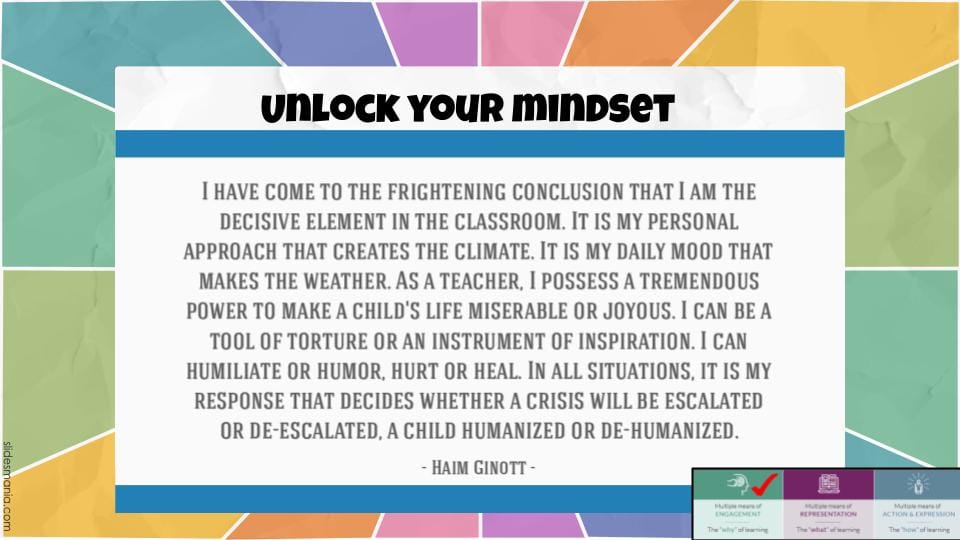
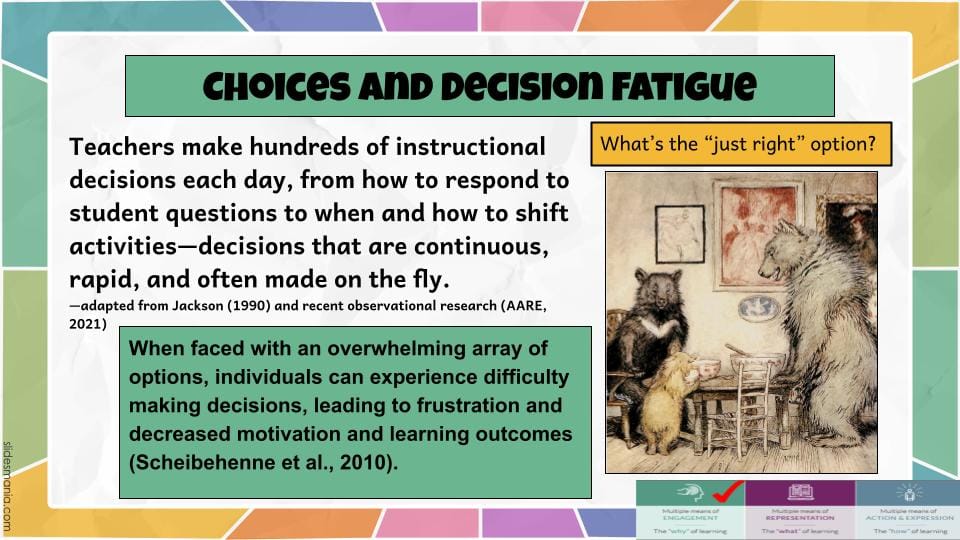
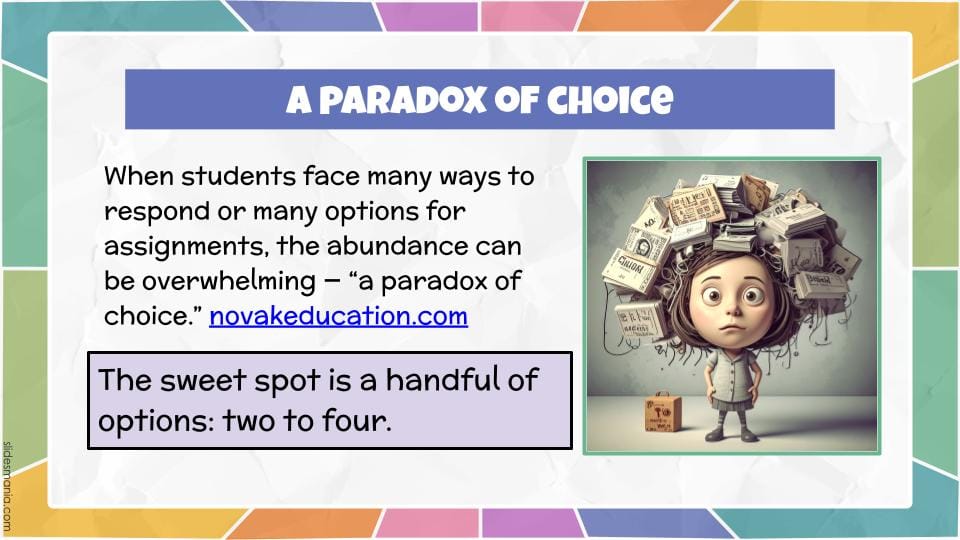
When applying UDL in the language classroom, a few immediate tensions arise when it comes to providing choices for students. Unlike other subjects, where students can independently seek resources, language teachers are often the primary source of language input. Authentic materials can often be too complex, risking confusion and raising students´ affective filters. So, how do we provide choice and support learners who are still building the skills to reflect, express themselves, and access content, without compromising rigor or confidence?
I encountered these challenges firsthand when I returned to classroom teaching full time after several years as a World Language leader. With all the choices teachers already manage, I initially struggled to incorporate meaningful choice into my lessons. Over time, I realized that UDL wasn’t about lowering expectations; it was about finding ways to make the 90% target language goal accessible to all learners. The key lies in unlocking the flexibility already embedded within our standards and practices, ensuring that every student, regardless of background or starting point, can access, connect with, participate in, and grow through our language programs.
This where UDL becomes the bridge between language immersion and access. By incorporating multiple means of representation, visuals, gestures, graphic organizers, scaffolded texts, and selective use of the target language, we make input more comprehensible to students. Sheltering vocabulary, without dumbing down content, is key: using familiar words and cognates, speaking at an appropriate pace for the level, repeating high-frequency words, and connecting words to real objects or images. When students demonstrate what they know, we can start with options such as drawing, selecting from two prompts, using sentence starters, or practicing out loud first. UDL invites us to shift from asking, “What do I have to cover?” to “How can more students access and express this content?” This shift doesn’t lower expectations; it broadens the pathways or “caminos” for meeting them.
This work doesn’t require perfection, just purposeful shifts. Offering choice within a familiar task, whether through different ways to show understanding or helping students set personalized language goals, can transform participation and boost achievement. It’s about creating a classroom that honors who students are and how they learn best, and then guiding them to pause and notice what supports their learning.
To look at the actionable steps, keep reading in Embracing Universal Design for Learning to Support Learner Variability in ACTFL‑Aligned Classrooms. NECTFL Review.
https://eric.ed.gov/?q=source%3A%22NECTFL+Review%22