From Warm-Ups to Retrieval: Making the Start of Class Count
Make the start of class count with intentional warm-ups that lead into retrieval practice. Learn how purposeful beginnings boost engagement, memory, and student readiness for deeper learning.
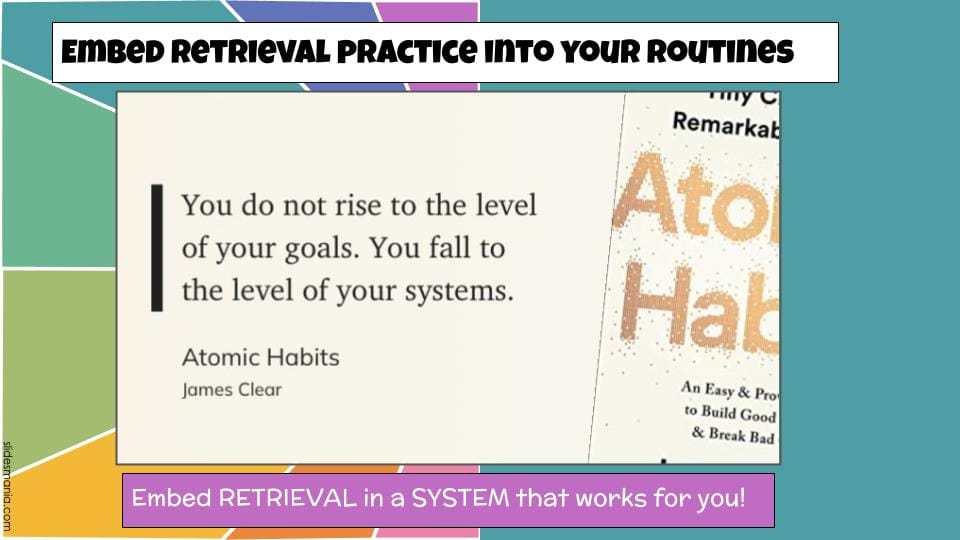
In Atomic Habits, James Clear reminds us that we do not rise to the level of our goals; we fall to the level of our systems.
I’ve felt this most in the classroom, especially on days when time is short and my energy is low.
I’ve learned the hard way that student focus, preparation, reflection, and, perhaps most importantly, remembering what they learned previously cannot depend on how much energy I have or whether students happen to feel motivated.
When I’m in the thick of it, I need something to lean on: a system that runs even when I’m not at my best, one that keeps learning moving forward on sick days and the in-between days when teaching feels heavy. I need something that quietly does the work, rooted in the Science of Learning.
Warm-ups, Do Nows, Bell work, Campanadas, Para Empezar, Exit tickets, Friday feedback, Reflections.
Different names. Same purpose.
They are the systems that quietly shape student behavior, attention, and learning every single day. They also give us, as teachers, something to lean on when creativity and energy aren’t flowing. For me, they’ve become the difference between hoping learning happens and intentionally designing for it.
How a Simple Routine Became a Power Tool
More than ten years ago, in one of the first middle schools where I taught, bell ringers were mandatory. That requirement nudged me toward structure, and I started using a “Para Empezar” weekly worksheet inspired by Teach for June. What I loved about it was its flexibility: one worksheet, endless ways to make it novel within the structure.
Each week, I gave students a single worksheet that included:
- “Weekend Chat” or "charla"
- Free Voluntary Reading (Lectura Libre)
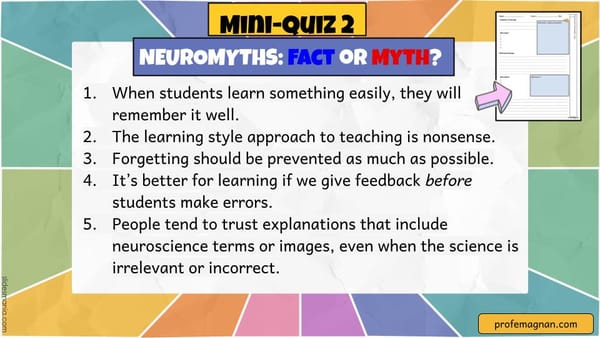
- Mini-quiz
- Reflection
It worked beautifully, not because it was flashy, but because it was predictable. I simply made sure we hit each component throughout the week. On Fridays, I posted a reflection question or two during the last five minutes of class and gathered feedback about what worked and what didn’t.
Those reflections quickly became my favorite thing to read. They helped me get to know my students better and gave me actionable feedback about my teaching. At the beginning of the year, I invited students to reflect in English, and over time I noticed something unexpected: many began, on their own, to express themselves in the target language.
During the first few weeks of school, many students didn’t write much. But once they realized I genuinely read and responded to their reflections, something shifted. Slowly, even students I wouldn’t have expected began to share and offer thoughtful, actionable feedback for both me and themselves.
I notice now if we start to run out of time, I usually have a student call out:
“Ey, Profe… we didn’t do la reflexión yet.”
Oh shoot, thank you. I'll put the questions on the board.
It works… and it works at every level: elementary, middle, and high school.
When I moved to the high school, the same structure held, only this time, I kept developing it. I added a “Write and Discuss” section and a second mini-quiz. I realized I needed more accountability: for example, after a reading or listening activity, I could improvise five true/false statements, have students correct their own work or a partner’s, and provide immediate feedback to see whether they had met the “can-do” mid-class or by the end. Simple. Effective.
When I pivoted to teaching grades 1–5 while my kids were young, I didn’t use a worksheet with my littles. Instead, each day included a question or song, a mini-quiz with thumbs up or down, and a co-created story for the Write and Discuss section on the board. The reflexión question was verbal, and students could turn and talk to a partner - often as simple as: What’s one word or phrase you learned this class or this week?
Later, when I served as a 6–12 World Language Coordinator, something clicked: this worksheet could become more than a routine. It could become a power tool if I intentionally built in retrieval, spacing, and interleaving.
The Moment I Knew the System Was Working
This year, I teach juniors and seniors. I’ve been out a few times and left lessons that followed the same familiar structure: daily question, retrieval, reading or listening activity, mini-quiz with immediate feedback, Write and Discuss, and reflection.
For one of the first times in my career, 98% of my students completed the work while I was out.
When I returned, I told them how impressed I was. They shrugged.
“Profe, we know the drill.”
That was the moment.
No confusion. No resistance. Just a bit of desirable difficulty. The students wanted to see if they got the questions right, and thoughtful reflections about what worked or didn’t work for them. Those reflections, by the way, remain my favorite thing to read.
It has been the most game-changing system I have experienced as a teacher.
The Weekly Retrieval System: What It Looks Like
What I’ve come to call my weekly retrieval worksheets are the backbone of the system. They are short, predictable, and feedback-focused, designed to reconnect students to prior learning and set the tone for each class.
Each week includes:
- 1 charla or personalized question: A weekend chat, calendar talk, or curiosity-driven question that connects to the day’s lesson
- 2 mini low-stakes quizzes:
- Short
- Predictable
- Feedback-focused, not grade-focused
- Low-stakes
I recently interviewed my students about what helps them most, and over 50% said the mini-quizzes are their favorite part of the lessons, students I didn’t expect included! When I asked why and what I am doing that is making them actually enjoy quizzes, a few explained that I only give quizzes when I know they are set up for success. They appreciate that the quizzes are low-stakes, provide a bit of desirable difficulty and a fun challenge, and help them figure out what they truly know, all while feeling confident and supported.
- 1 Friday feedback reflection:
- Name what stuck
- Identify what’s still fuzzy
- Reflect on strategies that helped, or didn’t
- Anything I should add or cut out for next week?
- Sometimes a fun extra question to learn about them
- 2 intentional retrieval moments (earlier content, not just yesterday’s lesson).
- Other elements: sentence starters with target structures, UDL-friendly reflection questions, quick checks for understanding
This structure does the work for both students and teacher:
- Students practice remembering before forgetting
- I get constant feedback on what needs reteaching
Assessment becomes a learning event, not a judgment
Why These Routines Matter
These systems do three essential things:
- They reduce cognitive load
Students don’t have to wonder what do I do when I walk in? The routine itself frees up working memory for learning. - They normalize retrieval and reflection
Learning isn’t about exposure, it’s about pulling knowledge back out. When retrieval is routine, it becomes safe and expected. - They build momentum and calm
The start of class sets the emotional tone. Predictable beginnings create psychological safety and readiness.
I use these as entry systems, not filler warm-ups. Short, focused, and intentional, they reconnect students to prior learning and set them up for the day.
Why they work:
- They anchor attention immediately
- They signal that learning starts the moment students enter
- They build consistency across days and weeks
For language classes, they offer daily, low-pressure output that compounds over time.
If you want to try out a system like this in your own classroom, I’ve put together ready-to-go weekly retrieval worksheets and reflection resources on my TPT store. They’re designed to be short, predictable, and adaptable for any level. You can start small and grow the system over time to make it work for you and your students, just like I did.
 la señora que sonríe
Why This Is a System, Not a Strategy
Individually, these practices seem small. Collectively, they create a learning ecosystem:
- Students expect to retrieve
- Mistakes feel normal
- Reflection is built in, not squeezed in
- Attention is designed for, not demanded
Just like habits, these routines compound. Over time, students become more confident, more aware of their learning, and less dependent on last-minute studying.
When retrieval is frequent, low-stakes, and built into instruction,
remembering takes care of itself.