A Door for Every Shape
What if the barrier was never the learner, but the design? A three-part UDL lesson that gets students thinking about how we build spaces that work for everyone, starting with a round door and a room full of shapes.
We just had a unified sports pep rally at our school, and it was wonderful. The staff and unified sports programs worked hard to include everyone and to empower the students to discover ways to help each student feel like a part of the community. Students were cheering each other on across programs, abilities, and social circles. I watched as different teams competed in a standing bike race that made enough wind to move a foam roller across to the opposite bike, and it turned into this electric moment where everyone cheered and each student felt that they mattered.
I left thinking: How do I bring this feeling into my classroom?
Step one: language.
We started small, with language. I’m a Spanish teacher, so we started there. I asked students: "What words push people out and which ones welcome them in?" Then we looked at examples together and crossed out the ones that created distance.
Step two: Gallery Walk.
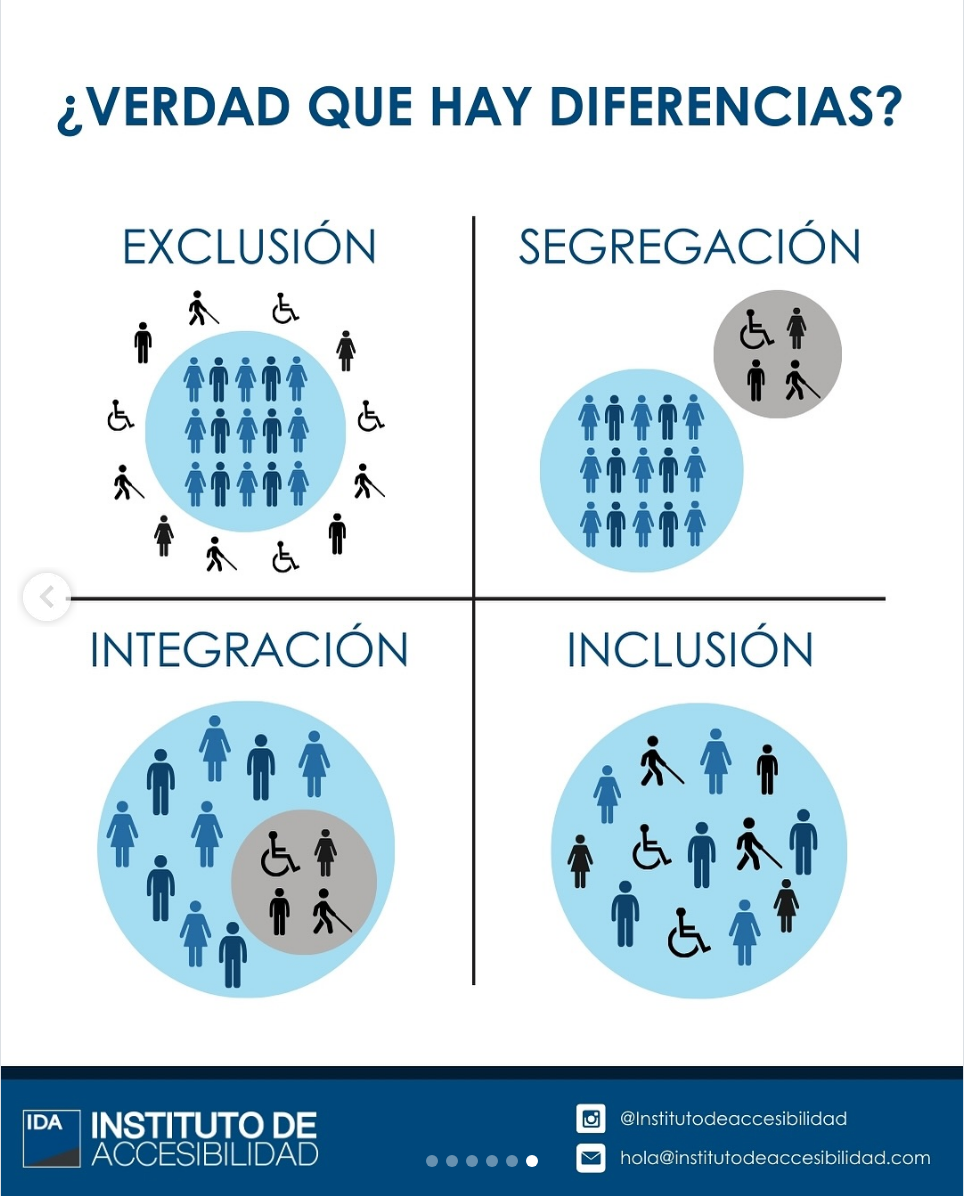
I posted four pictures around the hallway, and students had to decide: segregation, inclusion, exclusion, or integration. Some of them moved like detectives, pointing, debating, and whispering, “Wait, isn’t this kind of integration?” Messy, thinking-on-your-feet learning at its best.
Step three: shapes.
As students walked back into class, I handed each one a shape: a smiley face, a square, a triangle, or a star. Then I said:
“The class is invited to my house for a graduation party. Amazing food, great music, everyone is welcome!”
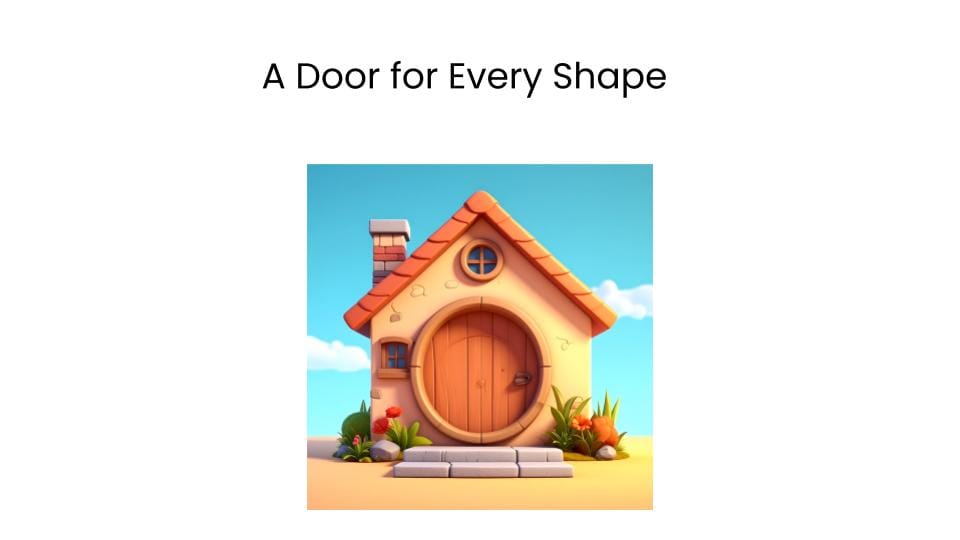
I handed them a picture of my house then hit them with the twist:
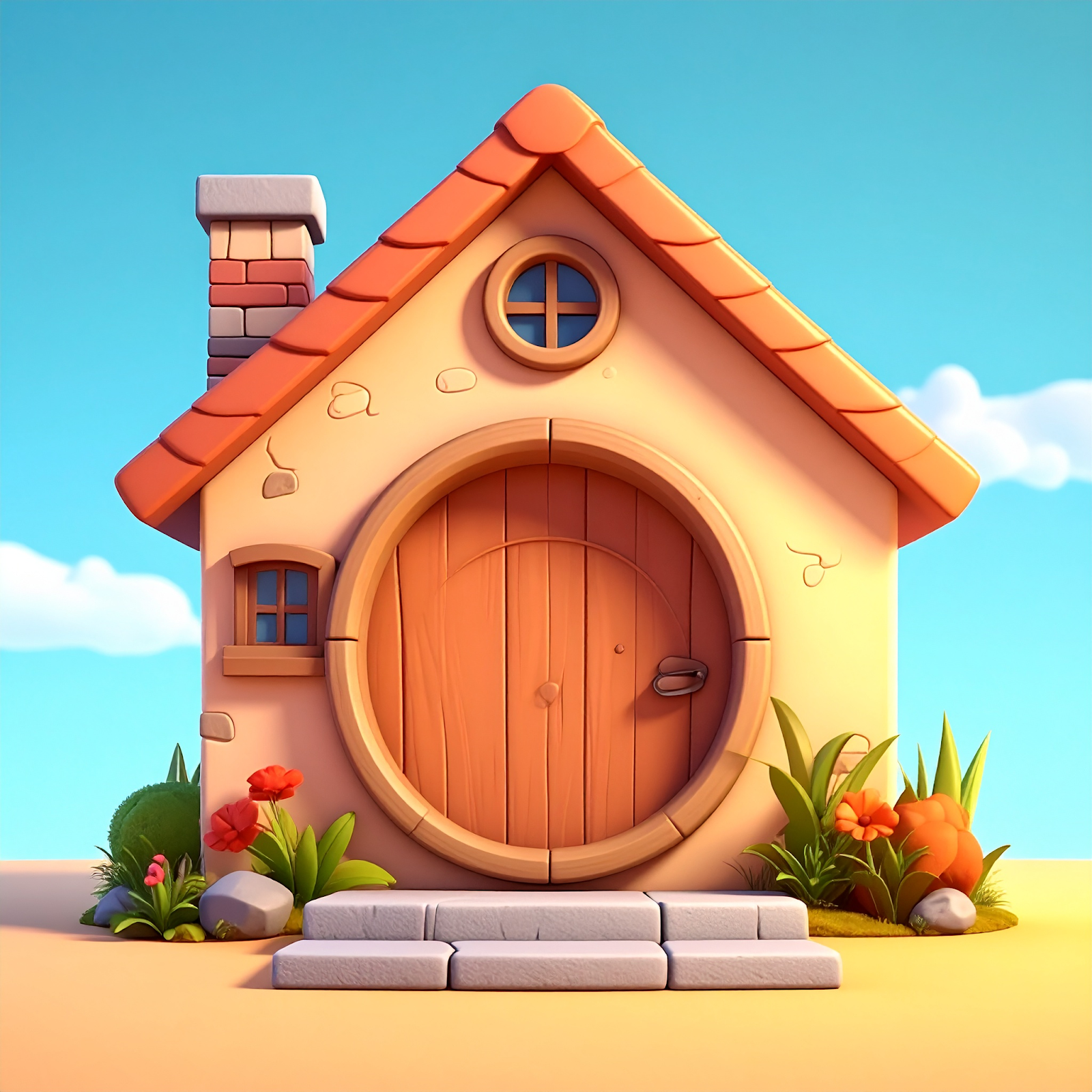
“Your challenge is to figure out how everyone can get through the round door.”
Some tried to fix the shapes:
- “Fold the square.”
- “Turn the triangle.”
- “Make the star smaller.”
- “If we fold the square’s corners, maybe it’ll fit.”
- “What if we make the door a star so the triangles can get in too?”
- “Can we go through the chimney?”
Some tried to change the setting:
- “Let’s move the party outside.”
- “Let’s go to my house, everyone can fit there."
Some mentioned a system of separation:
- “Each shape can have its own house.”
Students started to share out and we started poking holes in each idea together. Did we really want someone to have to change physically, emotionally, socially, or mentally just to walk through the door?
A few students started to realize, “Wait… the shapes aren’t the problem. The door is.”
The story that made it stick
There was a group of round shapes, stars, triangles of different colors, and a square. All the round shapes entered the house through a round door, unlike the square and other shapes with edges, which stayed outside because they could not pass through that door.
The square wanted to enter with its friends, but it had to face a great challenge: it stretched, bent, and tried to change its shape to fit, while the round shapes inside told it that it had to be round. The triangles and the stars also tried to find a way to enter, but none of their shapes worked. However, even though it tried with all its strength, it was impossible.
The round shapes said that they would have to cut off their corners, but the square refused because it would hurt a lot and it did not want to lose its true shape.
After talking for a long time, the round shapes, triangles, and stars realized that the real challenge was not the edges of the square, triangles, or stars, but the door. So they decided to make a small adjustment: the door was slightly modified so that the square, the triangles, and the stars could enter along with the round shapes.
With the edges now part of the door, the square, the triangles, and the stars felt included and understood that they did not need to change who they were to belong. The party continued with music, food, and friends, and everyone learned that sometimes the solution is to change the environment, not the people.
When we look at real life, we see that many people are excluded from activities and spaces, not because of anything they lack, but because of the “edges” of systems that weren’t designed for them. The problem is not the people. The solution is not to ask individuals to change who they are. Instead, we must design our environments, our rules, and our spaces so that everyone can participate, overcome barriers, and truly belong.
The reflection
After reading, we reflected. Where are places where you might have felt like a “square” trying to fit into a “round door”?
Those four pictures from the gallery walk? By the time we got here, the students already knew. They had experienced it.
We also read it in Spanish because "las figuras" deserve to hear his story in their own language too.
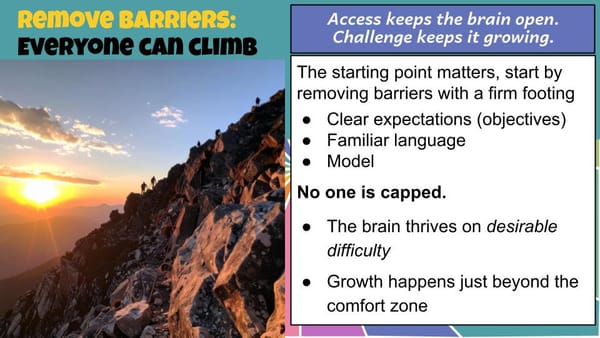
Designing lessons, activities, and classroom environments that anticipate and remove barriers for students is at the heart of Universal Design for Learning (UDL). Rather than asking students to “fit” into rigid structures, UDL challenges us to design flexible pathways so every learner can access the content, engage meaningfully, and demonstrate understanding in ways that honor who they are. It is the practice of turning the “round door” into a space where all shapes can belong, intentionally, proactively, and with inclusion at the center.
What’s one small change you could make to “widen the door” in your classroom this week so more students feel like they belong?
If you’d like to try out this activity with your students, you can find it on my TPT store here!
 profe magnan
Want to go deeper?
Read: Cognitive Overload: Why Students Disengage Before the Lesson Even Starts