
Metacognition
When Good Enough Is Good Enough
A science-of-learning reflection on perfectionism, retrieval practice, self-compassion, and ending the school year well.
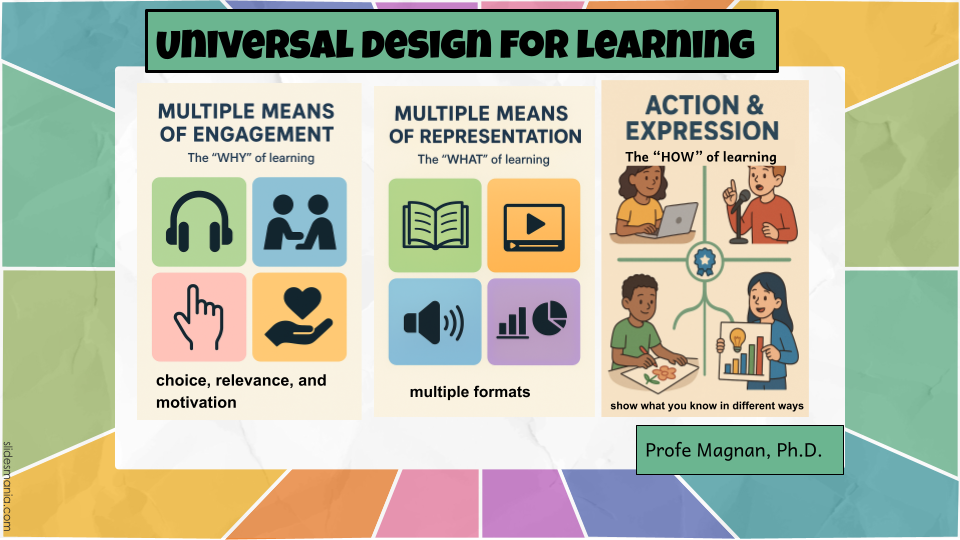
Universal Design for Learning (UDL) is a research-based framework for inclusive instruction. Discover practical strategies that reduce barriers, support learner variability, and help all students succeed.
Metacognition
A science-of-learning reflection on perfectionism, retrieval practice, self-compassion, and ending the school year well.

Metacognition
At the end of the school year, reflection can become retrieval helping teachers and students notice growth, remember connection, and carry learning forward.

Universal Design For Learning
After watching the same three students contribute every time, I rebuilt Write & Discuss from the ground up. Here's the step-by-step routine—rooted in UDL and cognitive load research—that finally got my entire class co-creating text together.

Cognitive load
Spring, seniors, and 80 minutes to fill — here's what I learned about designing for attention using UDL and the science of cognitive load.

Universal Design For Learning
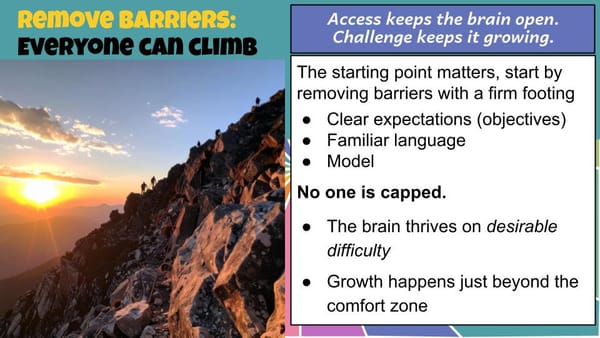
What if the barrier was never the learner, but the design? A three-part UDL lesson that gets students thinking about how we build spaces that work for everyone, starting with a round door and a room full of shapes.
Cognitive load
Students disengage before the lesson even starts — not because the work is too hard, but because cognitive overload has already shut down their working memory. Here are the practical moves that clear the path.
Universal Design For Learning
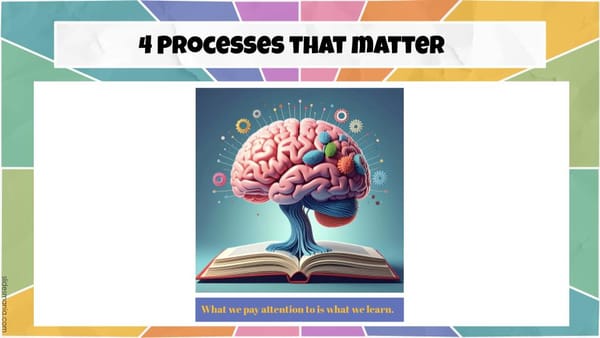
Brain-based learning doesn’t have to be complicated. Discover four key cognitive processes—attention, encoding, storage, and retrieval—that help students learn, remember, and succeed.

Universal Design For Learning
UDL helps language teachers design instruction for learner variability with intention. Explore practical strategies that build access, choice, and confidence while maintaining rigor and target language use.