Brain-Based Learning Made Simple: 4 Processes That Matter
Brain-based learning doesn’t have to be complicated. Discover four key cognitive processes—attention, encoding, storage, and retrieval—that help students learn, remember, and succeed.
I taught it, why don´t students remember it?
I started thinking about this question even more after a professional development session with Mike Travers (https://madlanguageteacher.weebly.com/) on retrieval practice, where he posed a similar question to all of us as teachers and department leaders. If we want to bridge the gap between what we teach and what students actually remember, it’s essential to understand the Cognitive Model for Educators.
I don’t think I could explain the cognitive processes behind learning better than Peter from Sense and Sensation, whose article I’ve linked below, but I’ve used his work to break these concepts into manageable chunks to apply to language teaching.
 Visit profile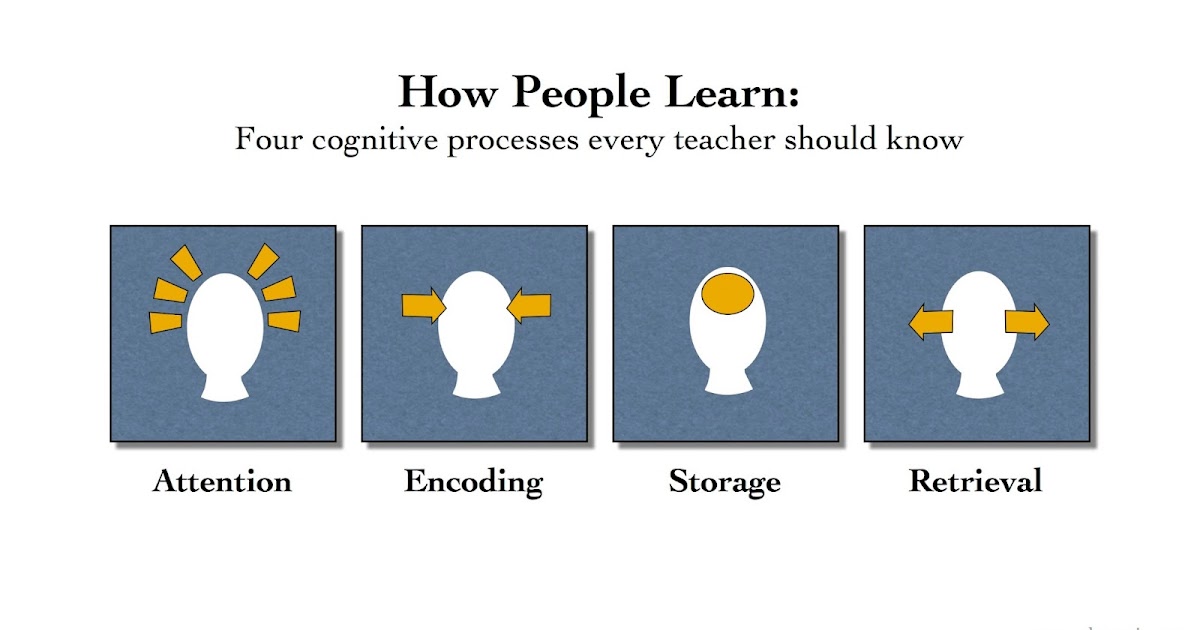
Attention
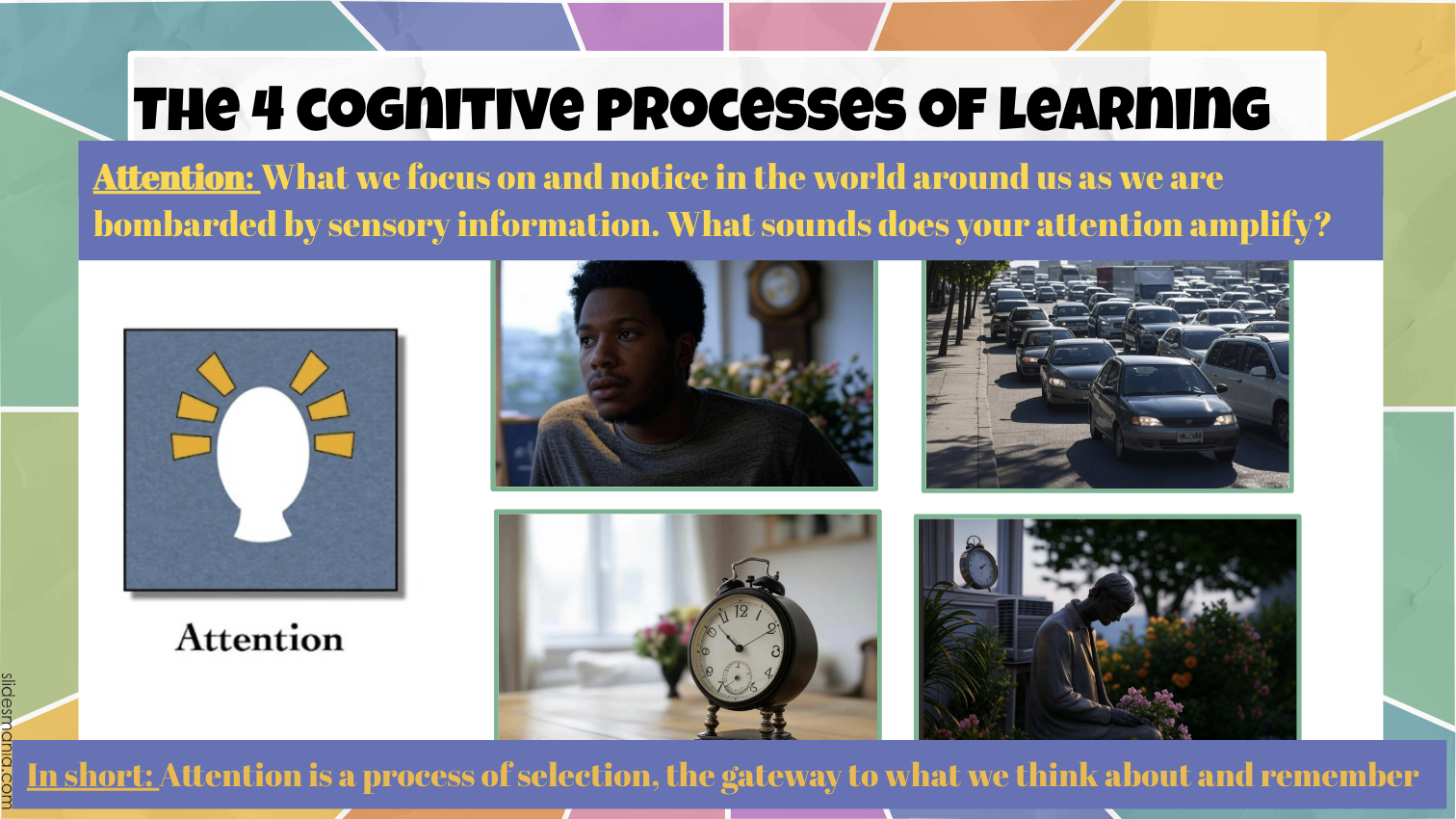
Attention is the mental process that decides what information from our surroundings we focus on. We are constantly surrounded by sights, sounds, and other sensory input, but only a small portion reaches our conscious awareness. Attention acts like a filter: it highlights what is relevant or interesting and blocks out what is less important.
What resonated with me as a teacher, is at the end of the day with the millions of students and people I interact with in the classroom, hallway, heck, even walking to the bathroom, but the end of the day my brain is flooded. Sometimes I run on autopilot, relying on habits my mind has built to filter what to notice. I barely blink at a student tossing a paper airplane toward the ceiling, while noticing every subtle hand raise that signals confusion.
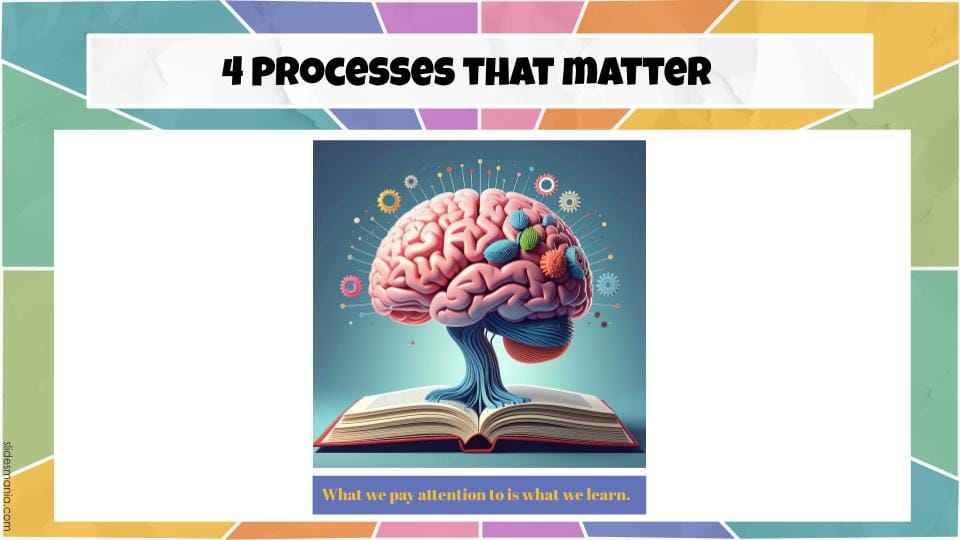
In learning, attention is critical. Students only remember and process the information they notice. As educators, our first step is to capture and guide attention, creating conditions where learners can engage fully with the material. In short, what students pay attention to is what they are likely to learn.
Encoding
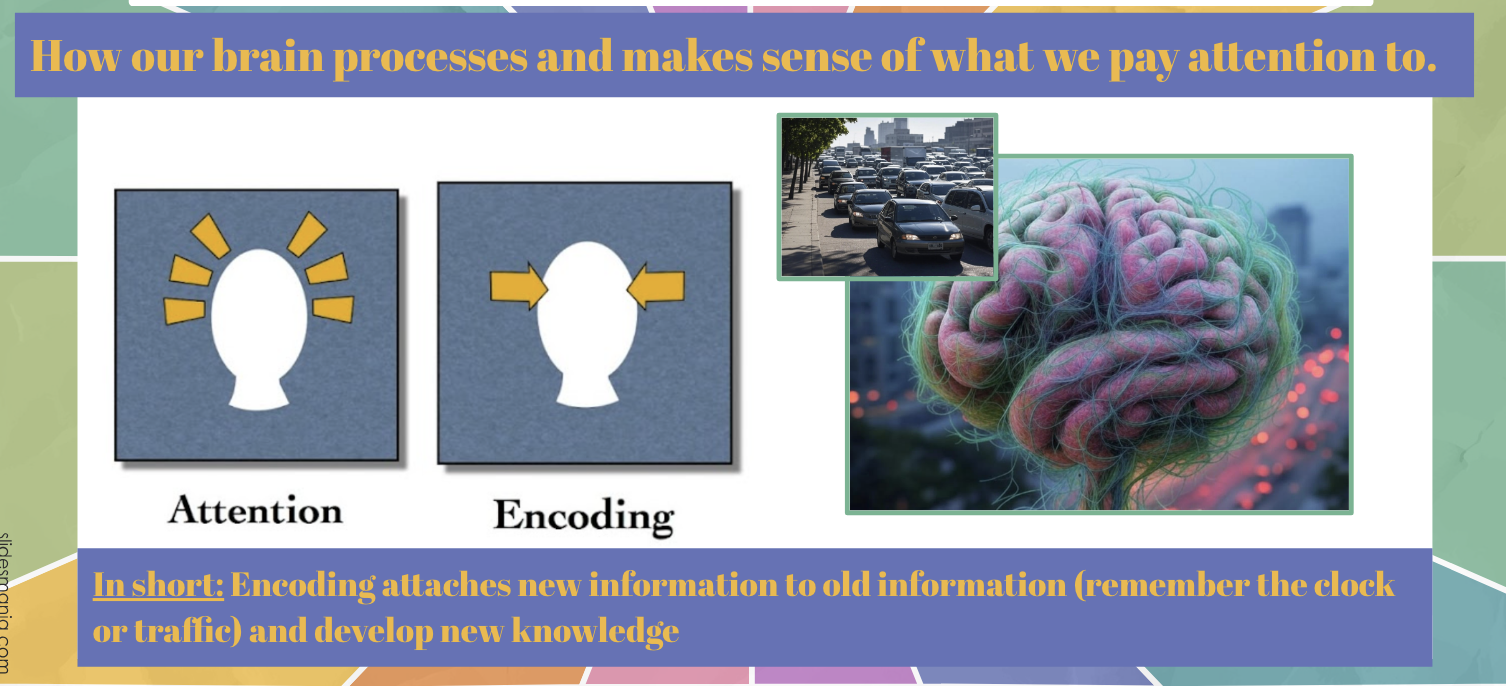
Encoding is how our brains take in new information and link it to what we already know. Hey, shout out to activating prior knowledge activities! After students pay attention to something, their brains try to make sense of it by connecting it to prior experiences or knowledge. This connection is what helps new information “stick.”
For example, in a language classroom, when students hear a new Spanish word, they understand it faster if they can relate it to something familiar such as a similar word in their own language, a gesture, a picture, or a context they already know. Without these connections, new vocabulary or grammar may be confusing and harder to remember.
Encoding is essentially the brain’s way of organizing learning: it creates mental hooks so that new knowledge is meaningful, easier to recall, and ready to use in real communication.
Storage
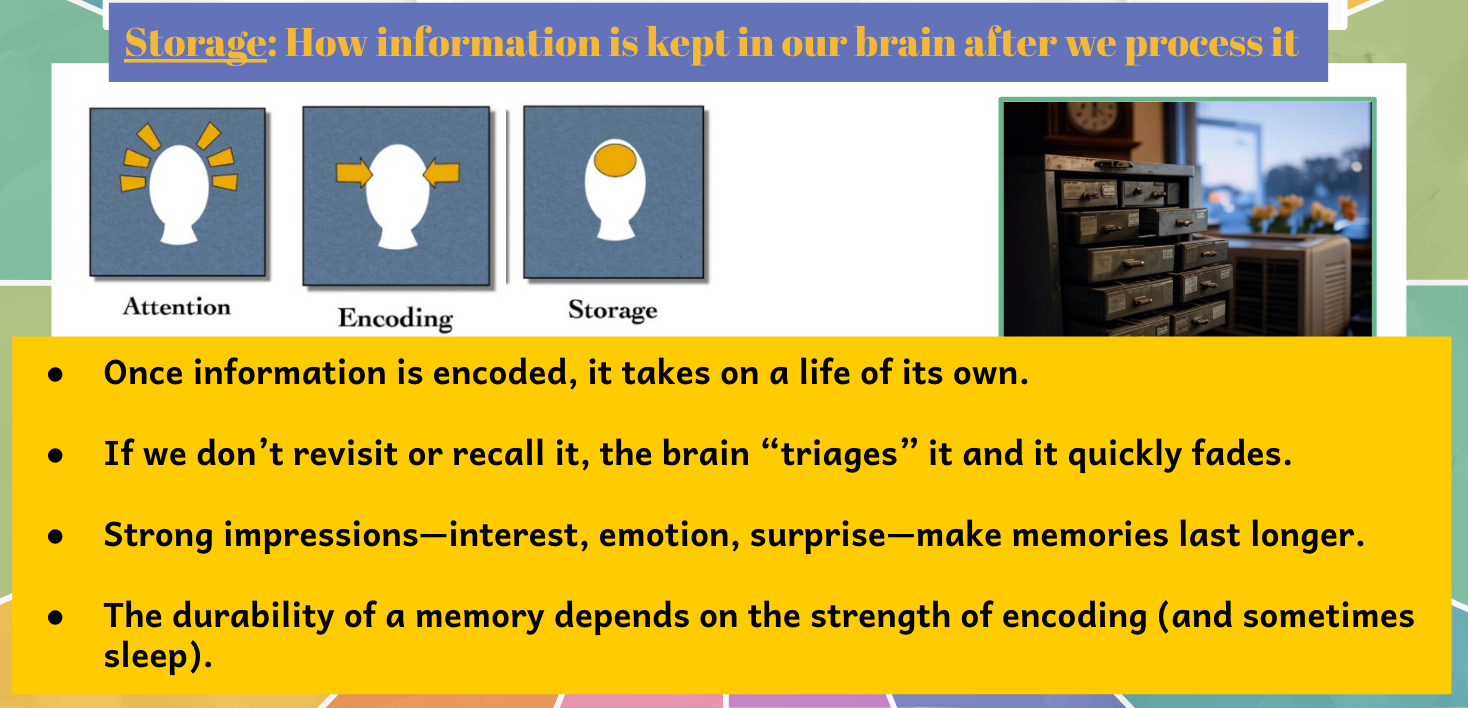
Storage is how the brain keeps information after it’s been encoded. Once students notice and understand something new, their brains decide what to hold onto and what to let fade. Without revisiting the information, much of it can be forgotten quickly.
For language learners, this means that a new word, phrase, or grammar structure may disappear unless it is repeated, practiced, or connected to something meaningful. Strong impressions, like using a word in a sentence, hearing it in a story, or connecting it to a personal experience, make memories last longer. SHOUT OUT TO THE POWER OF USING AND TELLING STORIES IN OUR CLASSES!
Sleep and rest also play a role: the brain consolidates important information while we sleep, helping it move from short-term to long-term memory. In practice, this means revisiting vocabulary, recycling structures in different activities, and giving students chances to use the language in meaningful ways will strengthen storage and improve retention.
Retrieval
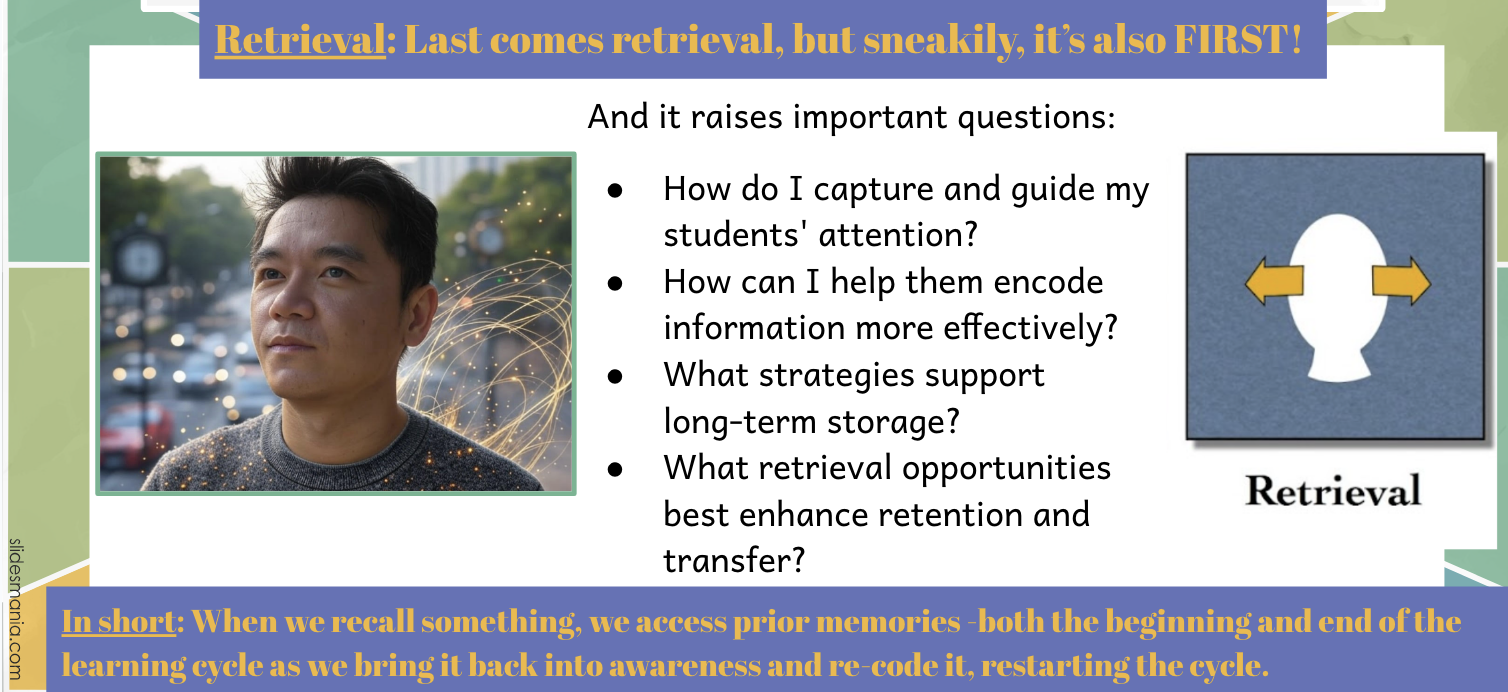
Retrieval is the process of bringing information back to mind. In language learning, it’s how students access words, grammar, or phrases they’ve encountered before. Retrieval doesn’t just check memory, it strengthens it. Each time a student recalls a word or structure, they are re-encoding it, making it more firmly stored for future use.
For example, when learners remember a new Spanish word or phrase and use it in a sentence, they are practicing retrieval. The act of recalling the word reinforces the memory and makes it easier to access next time. This is why activities like low-stakes quizzes, speaking prompts, storytelling, or using vocabulary in different contexts are so effective: they give students repeated, meaningful opportunities to retrieve and re-encode language.
Retrieval connects all the other processes of learning of attention, encoding, and storage into a cycle. The more we help students pay attention, link new information to prior knowledge, store it effectively, and retrieve it regularly, the stronger and more flexible their language skills become!
Putting It All Together
Attention, encoding, storage, and retrieval form a cycle that drives learning. Language teachers can use this knowledge to:
- Capture and focus student attention
- Connect new language to what students already know
- Reinforce learning through repeated and varied practice
- Provide meaningful retrieval opportunities to strengthen memory
By understanding and applying these principles, we can make language learning more effective, engaging, and lasting.
To learn a few more secrets backed by neuroscience to help your students (and ourselves) learn faster, check out Lila Landowski's TEDxTalk below.